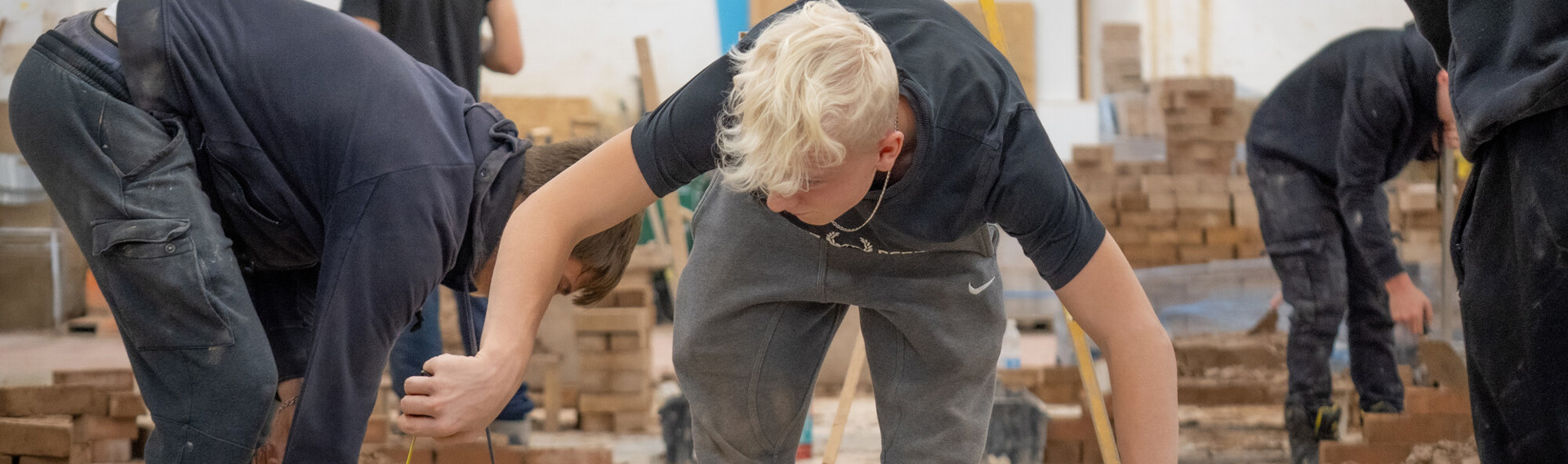
Diploma in Plastering, Level 1
Course Overview
The Level 1 Diploma in Plastering is a foundation construction qualification designed for beginners who want to learn the basics of plastering work. It develops practical skills and underpinning knowledge required to prepare surfaces and apply plaster finishes in both internal and external settings. This course is commonly delivered over a full academic year and blends practical workshops with classroom theory.
You’ll learn key tasks and cement core building trade skills that prepare you for further study, apprenticeships, or entry-level roles in construction.
For this course you will need: steel toe-capped safety footwear – essential for workshop and site-based tasks, high-visibility workwear or vest, safety glasses and gloves (as specified by the provider), tools & Stationery, a tape measure (5 m or similar) for measurement tasks, notebook or notepad for theory sessions and portfolio notes, pens, pencils, ruler, and a folder or binder for organising coursework and evidence.
Entry requirements
Minimum of GCSE Grade 2 in English Language (or equivalent).
Minimum of GCSE Grade 2 in Mathematics (or equivalent).
Course Modules
Health, Safety & Welfare in Construction
Understanding site safety, risk assessment, PPE use, and safe working practices.
Principles of Building Construction
Introduction to construction principles, materials, and communication in the workplace.
Preparing Background Surfaces
Preparing walls and substrates for plaster application.
Mixing Plastering Materials
Correct techniques to mix plaster and related materials.
Applying Scratch Coats
Applying scratch (keying) coats to internal backgrounds to prepare for finishing layers.
Fixing Sheet Materials
Installing dry lining and plasterboard accurately and safely.
Applying Floating & Setting Coats
Techniques for floating and setting plaster to achieve a flat and smooth finish.
Learners accumulate credits toward the qualification as they complete these modules.
How will I be assessed?
Assessment Methods
Assessment on this qualification typically includes:
Practical Assessments
Learners complete hands-on tasks in workshop environments where tutors assess plastering techniques and workmanship.
Portfolio / Coursework
A portfolio of evidence, including photos of practical work and tutor observations, is maintained and reviewed.
Knowledge Checks / Multiple-Choice Tests
Short written or online knowledge tests may assess understanding of theory and construction principles.
What can I do next
Successful completion of the Level 1 Diploma in Plastering enables several progression options:
Further Study
City & Guilds Level 2 Diploma in Plastering – builds intermediate skills and deeper technical knowledge.
Other construction trade qualifications (e.g., bricklaying, carpentry).
Apprenticeships
Entry onto a plastering apprenticeship programme (often combined with an NVQ at Level 2) once age and eligibility criteria are met.
Entry-Level Employment
Assistant roles in plastering or general construction, e.g., labouring support or workshop assistant.